Listen to this article
Social media marketing demands constant attention—posting schedules, engagement tracking, content creation, and performance analysis. For small business owners already wearing multiple hats, this can feel overwhelming. Artificial intelligence promises to lighten this load, but how much of your social media marketing can AI actually handle? This guide explores the realistic capabilities and limitations of AI-powered social media tools, helping you make informed decisions about integrating these technologies into your marketing strategy.
What AI Can Do for Your Social Media Marketing
AI has made remarkable progress in automating repetitive tasks and providing data-driven insights. Understanding these capabilities helps you identify where AI can deliver the most value for your business.
Content Scheduling and Optimization
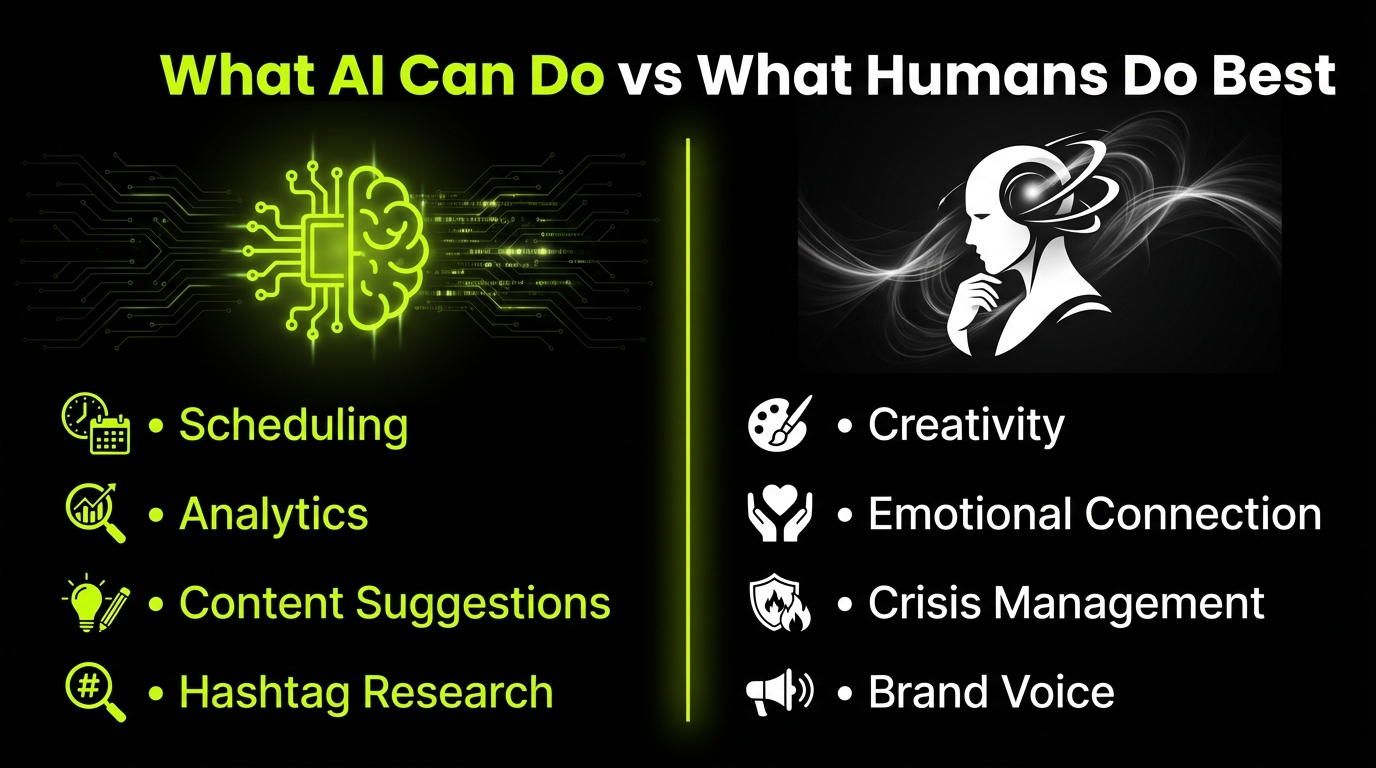
AI-powered scheduling tools analyze your audience's behavior patterns to determine optimal posting times. Rather than guessing when your followers are most active, these systems examine historical engagement data and automatically schedule posts for maximum visibility. This alone can significantly improve your content's reach without requiring additional effort on your part.
Content Generation and Suggestions
Modern AI tools can generate social media post drafts, suggest captions, and recommend hashtags based on trending topics in your industry. While these suggestions require human review and refinement, they provide a valuable starting point that can dramatically reduce the time spent staring at a blank screen. AI can also repurpose existing content—transforming blog posts into social snippets or creating variations of successful posts.
Analytics and Performance Tracking
AI excels at processing large amounts of data quickly. Social media analytics powered by AI can identify patterns in your performance metrics, highlight which content types resonate with your audience, and surface insights that might take humans hours to discover manually. These tools can track competitor activity, monitor brand mentions, and provide actionable recommendations based on data trends.
Social Listening and Sentiment Analysis
AI-powered social listening tools monitor conversations about your brand, industry, and competitors across multiple platforms simultaneously. They can analyze sentiment—determining whether mentions are positive, negative, or neutral—and alert you to emerging trends or potential issues before they escalate. This real-time awareness helps you stay responsive without manually searching through endless feeds.
Chatbots and Automated Responses
AI chatbots can handle common customer inquiries on social platforms, providing instant responses to frequently asked questions about business hours, pricing, or product availability. This ensures your audience receives timely engagement even outside business hours, improving customer satisfaction while reducing the burden on your team.
Where Human Involvement Remains Essential
Despite AI's impressive capabilities, certain aspects of social media marketing require the nuance, creativity, and emotional intelligence that only humans can provide.
Brand Voice and Authenticity
Your brand voice is what makes your business recognizable and relatable. While AI can mimic writing styles, it struggles to capture the authentic personality that builds genuine connections with your audience. Human oversight ensures your content maintains the unique tone and values that differentiate your brand from competitors. Audiences increasingly value authenticity, and they can often detect when content feels artificial or generic.
Creative Strategy and Storytelling
AI can generate content variations and suggest topics, but developing compelling narratives and creative campaigns requires human imagination. The emotional resonance of a powerful story, the humor in a perfectly timed post, or the creativity behind a viral campaign—these elements emerge from human understanding of culture, emotion, and context that AI cannot fully replicate.
Crisis Management and Sensitive Topics
When controversies arise or sensitive situations develop, human judgment is critical. AI lacks the contextual awareness to navigate complex social issues or respond appropriately to customer complaints that require empathy and understanding. A tone-deaf automated response during a crisis can cause significant brand damage. Human involvement ensures responses are thoughtful, appropriate, and aligned with your company's values.
Community Building and Relationship Management
Building a loyal community around your brand requires genuine human interaction. While AI can handle initial responses, deeper conversations, relationship nurturing, and community management benefit from human involvement. Recognizing loyal customers, remembering past interactions, and showing genuine appreciation builds loyalty that automated systems cannot achieve.
Finding the Right Balance for Your Business
The most effective approach combines AI efficiency with human creativity and oversight. Here's how to implement a balanced strategy:
Start with Clear Objectives
Identify which tasks consume the most time and offer the best opportunities for automation. For most businesses, scheduling, basic analytics, and initial content drafting are prime candidates for AI assistance. Tasks requiring creativity, emotional intelligence, or strategic thinking should remain primarily human-driven.
Implement a Human Review Process
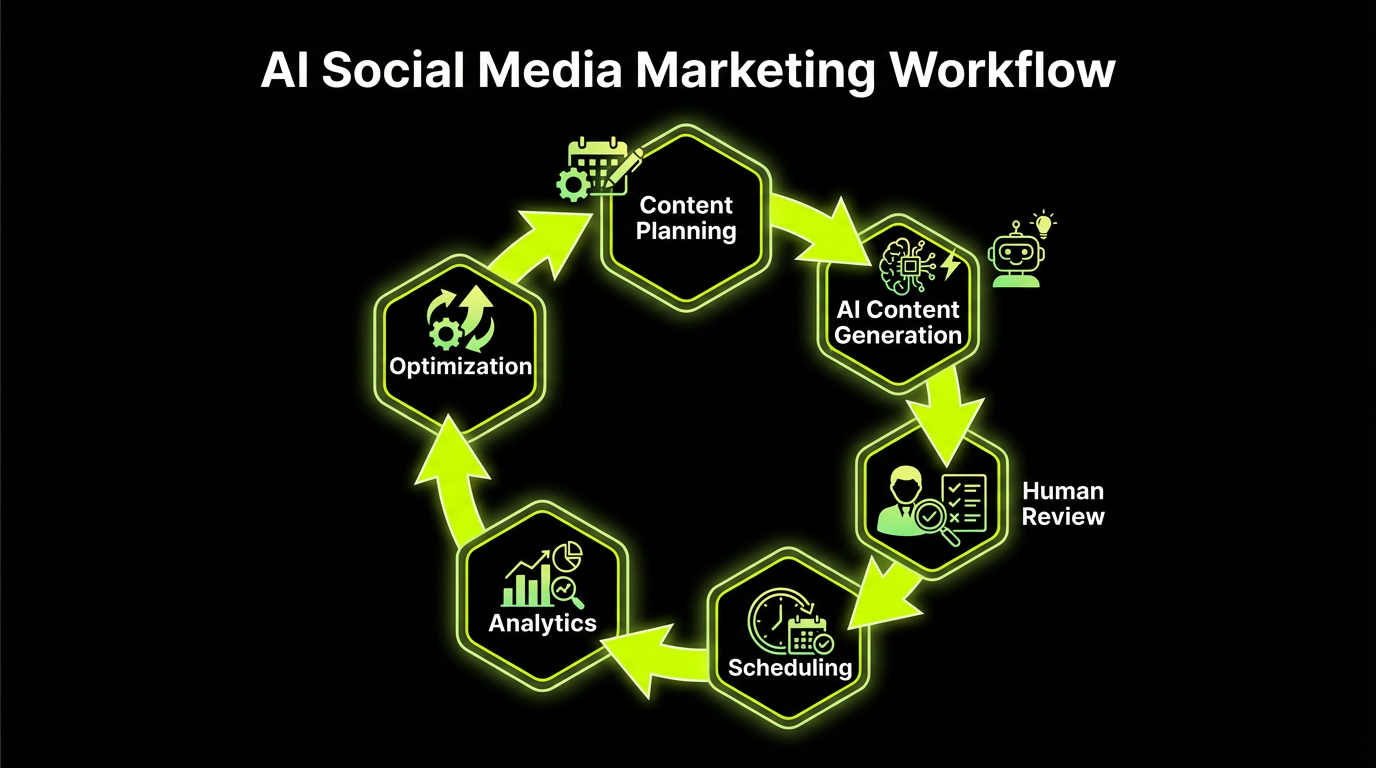
Never publish AI-generated content without human review. Establish a workflow where AI creates drafts and suggestions, but humans approve, refine, and finalize all content before it goes live. This maintains quality control while still benefiting from AI's time-saving capabilities.
Monitor and Adjust
Track how AI-assisted content performs compared to fully human-created content. Pay attention to engagement metrics, audience feedback, and brand perception. Use these insights to refine your approach, increasing AI involvement where it works well and maintaining human control where it matters most.
Popular AI Social Media Tools for Small Businesses
Several AI-powered platforms cater specifically to small business needs. Scheduling tools with AI optimization, content generation assistants, and analytics platforms with machine learning capabilities are increasingly accessible and affordable. When evaluating options, consider ease of use, integration with your existing platforms, pricing that scales with your needs, and the quality of AI-generated suggestions.
The Bottom Line: AI as Your Marketing Partner
Can AI do your social media marketing? The honest answer is: partially. AI can handle significant portions of the workload—scheduling, analytics, content suggestions, and routine engagement. However, the elements that make social media marketing truly effective—authentic brand voice, creative storytelling, emotional connection, and thoughtful community building—require human involvement.
Think of AI as a capable assistant rather than a replacement. By delegating repetitive tasks to AI while focusing your human energy on strategy and creativity, you can achieve better results with less effort. The businesses that will succeed are those that learn to leverage AI's strengths while maintaining the human touch that audiences value.
Key Takeaways
- •AI excels at scheduling, analytics, content suggestions, and social listening—tasks that save significant time.
- •Human involvement remains essential for brand voice, creative strategy, crisis management, and community building.
- •Always implement human review for AI-generated content before publishing.
- •The most effective strategy combines AI efficiency with human creativity and oversight.